

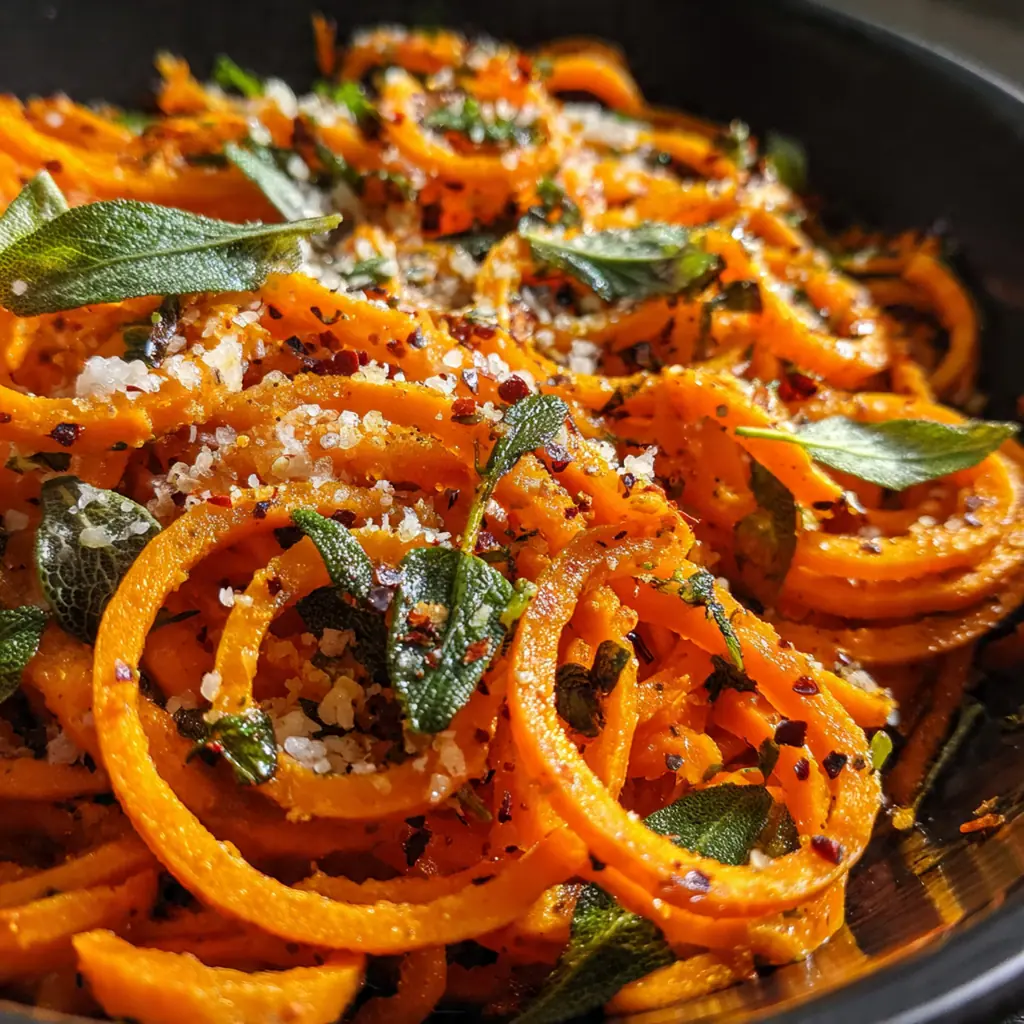
Spiralized Brown Butter Sage Sweet Potato Noodles transform humble roots into a cozy, restaurant-worthy side in just half an hour. This dish has become my favorite way to celebrate sweet potatoes, where their natural sweetness gets perfectly balanced by savory, nutty brown butter. It’s a distinctly American take on comfort food that’s both simple and impressively elegant. You get a beautiful plate of food with minimal effort, making it ideal for busy weeknights or a special dinner with friends.
Why You'll Love This Recipe
- It’s ready in a flash, from prep to plate in just 30 minutes
- Simple whole ingredients create a massive depth of flavor
- You get that unbeatable brown butter and sage combo every time
- It’s a fun, gluten-free twist that feels like a treat
- This recipe is now my go-to when I need a side that wows
Ingredients You’ll Need
- Sweet potatoes: Pick ones that are firm and heavy for their size to ensure they spiralize neatly into perfect noodles without breaking. I always look for smooth, unblemished skins.
- Unsalted butter: Using unsalted lets you control the seasoning of your final dish completely. Browning it creates a deep, toasty flavor you can’t get from oil.
- Fresh sage leaves: They’ll crisp up beautifully in the hot butter, adding a fragrant, earthy punch that’s essential to the dish. Dried sage just isn’t the same here.
- Garlic: Minced fresh garlic gets aromatic fast in the butter, providing a savory backbone that complements the sweetness of the potatoes. Don’t let it burn.
- Olive oil: A splash helps regulate the heat when you cook the garlic and adds a fruity note to the rich brown butter.
- Kosher salt: Its coarse texture adheres well to the noodles and seasons them evenly throughout the cooking process.
- Freshly ground black pepper: Grinding it fresh gives a brighter, more aromatic kick compared to pre-ground, which can taste dusty.
- Red pepper flakes: This is your optional secret weapon for a gentle, warming heat that cuts through the richness. A little goes a long way.
- Fresh lemon juice: The acidity is non-negotiable—it brightens the entire dish and prevents it from feeling too heavy. Always squeeze it fresh.
- Parmesan cheese: A light sprinkle right at the end adds a salty, umami finish if you’re not avoiding dairy.
- Fresh parsley: Chopped as a final garnish, it adds a pop of color and a fresh, grassy note that ties everything together.
- Toasted walnuts or pecans: They offer a fantastic crunch and nuttiness that mirrors the brown butter, making the texture more interesting.
How to Make It
Spiralize Your Sweet Potatoes:
Begin by peeling your sweet potatoes to ensure the spiralizer can grip them smoothly. Use the medium blade on your spiralizer to create those perfect, curly noodles. I find setting them on a large plate or in a bowl keeps them tidy and ready to go. Working with firm potatoes makes this step a breeze.
Brown the Butter:
Melt your butter in a large, light-colored skillet over medium heat. A light-colored pan lets you watch the magic happen as the butter foams, then turns a deep golden brown with a nutty aroma. This takes about three to five minutes, but stay close because it can burn in a heartbeat. You’re looking for those tiny brown bits at the bottom.
Fry the Sage Leaves:
Once your butter is beautifully browned, carefully add all the fresh sage leaves. They’ll sizzle and crisp up in under a minute. Use a slotted spoon to quickly transfer them to a paper towel-lined plate. This leaves the flavored butter in the pan for the next step and saves those crispy garnishes.
Sauté the Aromatics:
Pour the olive oil into the same skillet with the brown butter, then add your minced garlic. Stir it constantly for just about 30 seconds until it’s incredibly fragrant. You don’t want the garlic to brown, just to wake up its flavor and infuse the fat. This base is what makes the noodles so savory.
Cook the Noodles:
Turn your heat up to medium-high and add all the spiralized sweet potato noodles to the skillet. Use tongs to gently toss and coat every strand in that glorious brown butter garlic mixture. Let them cook for five to seven minutes, tossing occasionally, until they’re tender but still have a slight bite. Overcooking turns them mushy, so keep them moving.
Season and Finish:
Once the noodles are cooked, take the skillet off the heat. Season everything with the salt, black pepper, and red pepper flakes if you’re using them, tossing to combine evenly. Drizzle the fresh lemon juice right over the top and give it one final gentle toss. The lemon juice is the brightening hero that makes all the flavors pop.
Serve and Garnish:
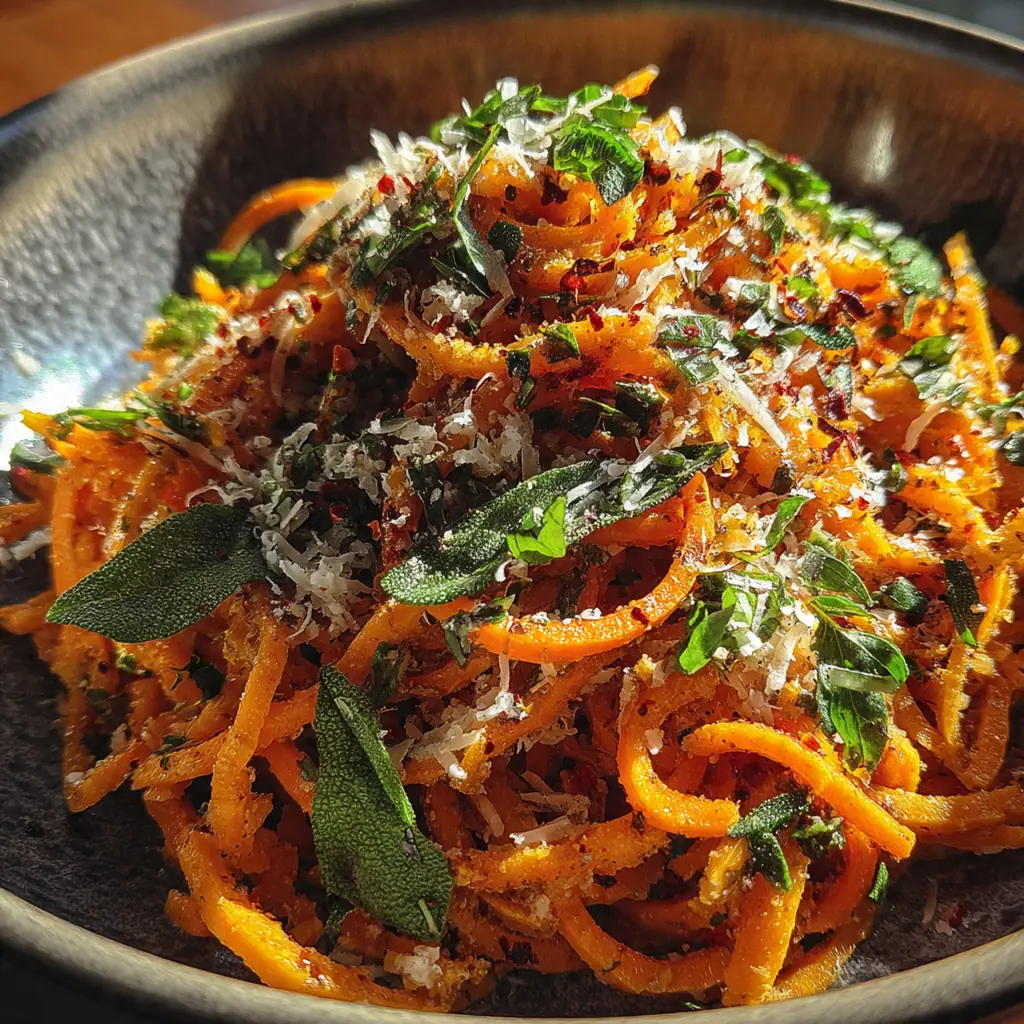
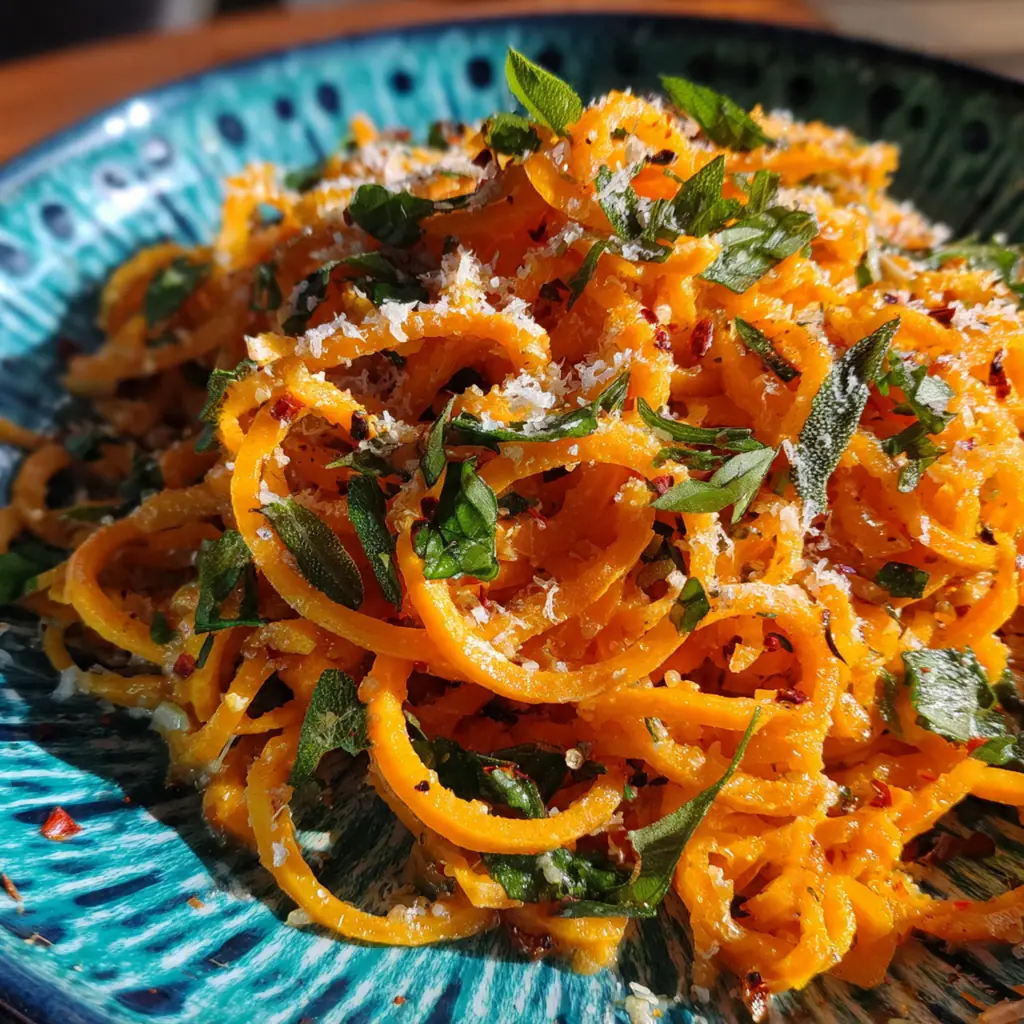
Transfer your spiralized brown butter sage sweet potato noodles to a serving dish immediately. Crumble the reserved crispy sage leaves over the top, then sprinkle with Parmesan cheese and any optional garnishes like chopped parsley or toasted nuts. Serve it right away while everything is warm and the textures are perfect.
You Must Know
- Firm sweet potatoes are your best friend for spiralizing
- Use a light-colored pan to nail the brown butter stage
- That squeeze of fresh lemon juice is absolutely essential
- Cook the noodles just until tender to keep their texture
- I never skip the crispy sage—it’s the crown jewel
Storage Tips
You can store any leftovers in an airtight container in the fridge for up to three days, though the noodles will soften a bit as they sit. When you’re ready to reheat, I recommend using a skillet over medium heat with a tiny splash of water or olive oil to help them loosen up and refresh. The microwave can make them steam and become too soft, so the stovetop method is worth the extra minute. They’re still tasty the next day, but this dish truly shines when served fresh and hot.
Ingredient Substitutions
If you don’t have a spiralizer, you can use a julienne peeler or even just cut the sweet potatoes into very thin matchsticks—they’ll cook just as fast. For a dairy-free version, swap the butter for a high-quality vegan butter that browns well and simply omit the Parmesan cheese. In a pinch, you could use fresh thyme instead of sage for a different but equally cozy herbal note. If you’re out of fresh lemon, a tiny splash of white wine vinegar or apple cider vinegar can provide a similar brightening effect, though the flavor will be a bit different.
Serving Suggestions
This dish pairs beautifully with simply roasted chicken or pan-seared pork chops, where its rich, savory notes complement the main protein perfectly. For a vegetarian feast, I love it alongside a big white bean salad or a lemony arugula salad to keep things light. It also makes a fantastic bed for a fried egg or some seared tofu for a quick, complete meal. Don’t be afraid to serve it as the star of the plate with some crusty bread to soak up any remaining brown butter sauce.
Cultural Context
While spiralizing vegetables is a modern kitchen hack, the heart of this dish lies in the timeless combination of brown butter and sage, a classic technique rooted in French and Italian cuisine. Brown butter, or *beurre noisette*, is a French staple that adds a deep, toasty dimension to simple ingredients. The use of sage with sweet elements like potato or squash is a beloved tradition in Northern Italian cooking, especially in autumn. This recipe brings those elegant, old-world flavors together with a contemporary, fun-to-eat shape, creating a side that feels both familiar and excitingly new on the American table.
Pro Tips
- Choose sweet potatoes that are long and straight for easier spiralizing
- Don’t crowd the skillet—cook in batches if needed for the best texture
- Reserve a bit of the crispy sage to garnish after plating for maximum impact
- Let the brown butter get a deep amber color for the fullest nutty flavor
- I always have extra lemon wedges on the table for anyone who wants more zip
Frequently Asked Questions
Firm, medium to large-sized sweet potatoes with smooth, even shapes are ideal. They’re easier to peel and spiralize into uniform noodles. Avoid very knobby or irregularly shaped potatoes, as they can be tricky to work with on the spiralizer.
You can prep the components. Spiralize the sweet potatoes and store them in cold water to prevent browning. Brown the butter and fry the sage, then reheat gently before combining with the freshly drained and sautéed noodles for the best texture.
If you don’t have fresh sage, fresh thyme or rosemary are excellent savory alternatives. For dried sage, use about 2 teaspoons, but add it to the brown butter at the start to rehydrate, as it won’t crisp like fresh leaves.
The sweet potato noodles are ready when they are tender but still have a slight bite, about 4-5 minutes of sautéing. They should be wilted and flexible, not mushy. Taste one to check for doneness.
This savory side pairs beautifully with roasted chicken, pork chops, or a simple pan-seared fish like salmon. For a vegetarian meal, serve it alongside a hearty lentil loaf or stuffed portobello mushrooms.